Math Worksheets for Young Learners: A Practical Guide
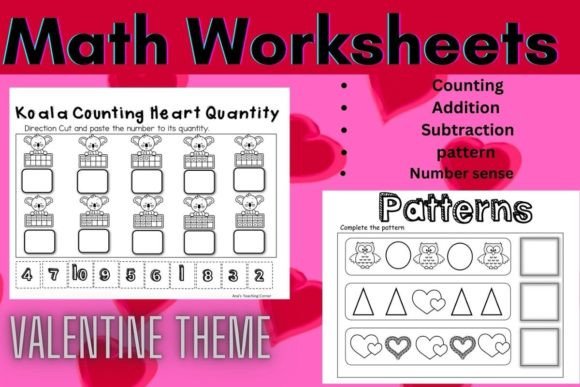
Math worksheets are an essential tool in early childhood education, offering a structured and engaging way for young learners to develop foundational math skills. Designed for kindergarten through second grade students, these worksheets provide opportunities to practice key concepts such as counting, addition, subtraction, patterning, fact families, and more. With the right resources, educators and parents can make learning math both enjoyable and effective.
One of the most appealing aspects of math worksheets is their versatility. They can be used in a variety of educational settings, including independent math centers, homework assignments, morning work, whole group activities, small group sessions, and even as early finisher activities. This flexibility makes them a valuable resource for teachers looking to streamline lesson planning and maximize instructional time.
Why Consider Math Worksheets?
Math worksheets offer several advantages that make them a popular choice among educators and parents. For one, they provide a clear structure for learning, allowing students to focus on specific skills without distractions. Additionally, worksheets often include visual elements, such as color-by-code activities or themed illustrations, which can help maintain student interest and motivation.
Another benefit of using math worksheets is that they allow for easy differentiation. Teachers can select worksheets that match the skill level of individual students, ensuring that each child is appropriately challenged. This personalized approach supports diverse learning needs and helps students build confidence in their abilities.
For parents, math worksheets serve as a useful supplement to classroom instruction. They can be used at home to reinforce what children are learning in school or to provide extra practice for those who need it. The convenience of printable worksheets also makes them ideal for busy families who may not have access to additional learning materials.
Key Features of Effective Math Worksheets
When selecting math worksheets, it's important to consider the content and design. High-quality worksheets should align with curriculum standards and cover essential math topics. For example, worksheets focused on number sense, counting, tracing numbers, identifying shapes, and understanding place value (tens and ones) are crucial for building a strong mathematical foundation.
Color-by-code activities are a popular feature in many math worksheets, as they combine creativity with problem-solving. These activities encourage students to solve math problems and then use the answers to color in corresponding sections of a picture, making the learning process more interactive and fun.
Pattern recognition and fact family exercises are also common in math worksheets. These activities help students understand relationships between numbers and develop critical thinking skills. Missing number worksheets challenge students to identify patterns and apply logical reasoning, further enhancing their mathematical fluency.
Considerations and Tradeoffs
While math worksheets offer numerous benefits, there are some considerations to keep in mind. One potential drawback is that over-reliance on worksheets may limit opportunities for hands-on learning and real-world application of math concepts. It's important to balance worksheet-based learning with other instructional methods, such as manipulatives, games, and collaborative activities.
Additionally, some students may find traditional worksheets repetitive or unengaging. To address this, educators can incorporate a variety of worksheet formats, including puzzles, mazes, and riddles, to keep students interested and motivated. Digital versions of math worksheets can also be used to add an interactive element to learning.
Another consideration is the time required to prepare and distribute worksheets. While many resources are available online, printing and organizing materials can be time-consuming. However, digital platforms and pre-made worksheet bundles can help reduce preparation time and make the process more efficient.
Situations Where Math Worksheets Are a Strong Fit
Math worksheets are particularly well-suited for situations where structured practice is needed. For example, they are ideal for reinforcing newly introduced concepts, providing review material before assessments, or supporting students who require additional practice. They are also beneficial for students who learn best through repetition and visual aids.
In classrooms with limited resources or large student-to-teacher ratios, math worksheets can serve as an effective tool for independent learning. They allow students to work at their own pace and provide immediate feedback, helping them identify areas where they need improvement.
For homeschooling families or parents who want to support their child's math development, worksheets offer a convenient and accessible way to supplement learning. They can be used as part of a daily routine or as occasional reinforcement activities.
Alternatives to Math Worksheets
While math worksheets are a valuable resource, they are not the only option for teaching math. Alternative approaches include using manipulatives, such as blocks or counters, to help students visualize math concepts. Educational games and apps can also be used to make learning more interactive and engaging.
Group activities and project-based learning are other alternatives that promote collaboration and critical thinking. These methods encourage students to apply math skills in real-world contexts, fostering a deeper understanding of mathematical concepts.
Ultimately, the choice between worksheets and alternative methods depends on the needs of the students and the goals of the educator. A blended approach that incorporates multiple strategies can provide a well-rounded and effective math learning experience.
Final Thoughts
Math worksheets are a practical and effective tool for teaching young learners essential math skills. They offer flexibility, structure, and a variety of engaging activities that can be tailored to meet the needs of different students. Whether used in the classroom or at home, math worksheets can play a valuable role in supporting mathematical development.
By considering the strengths and limitations of math worksheets and incorporating them into a balanced instructional approach, educators and parents can help ensure that students receive a comprehensive and meaningful math education.